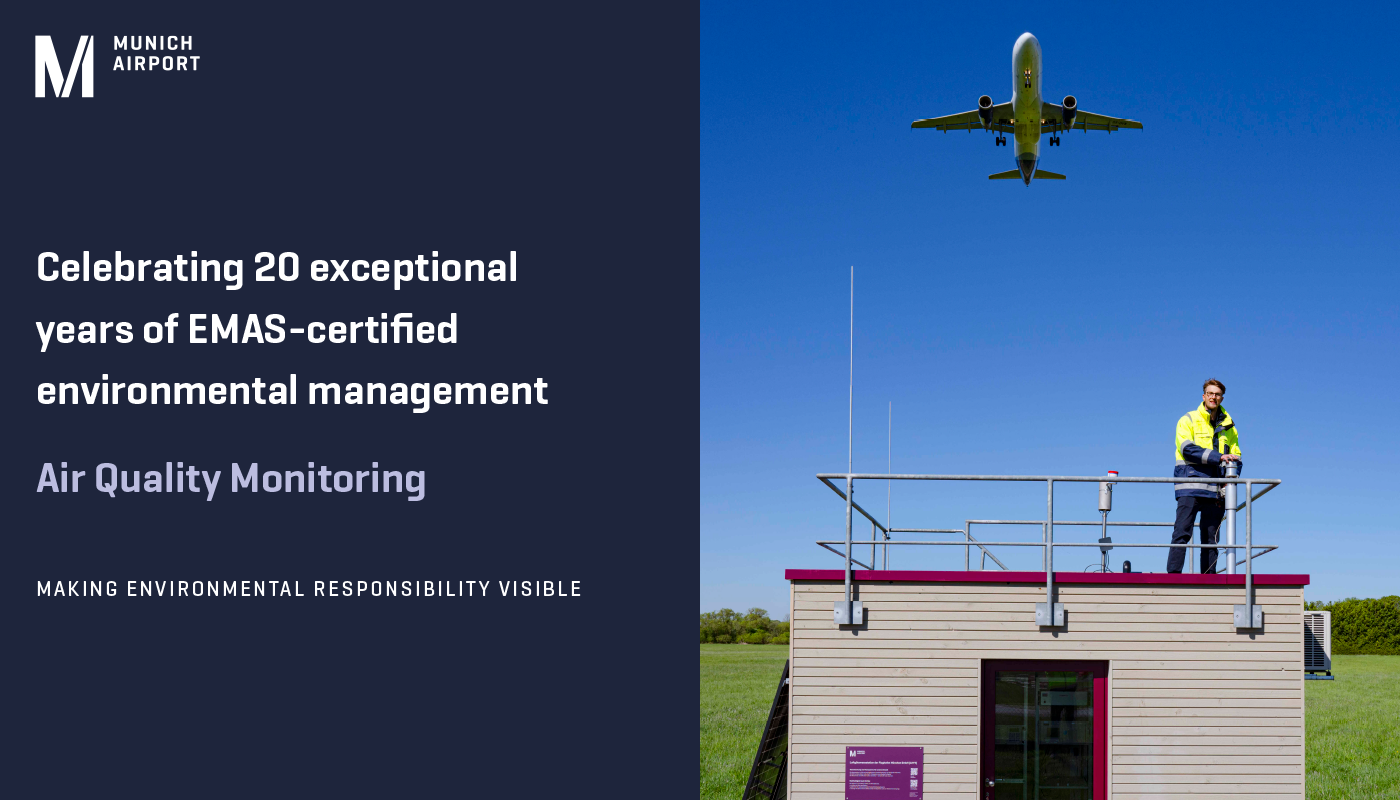
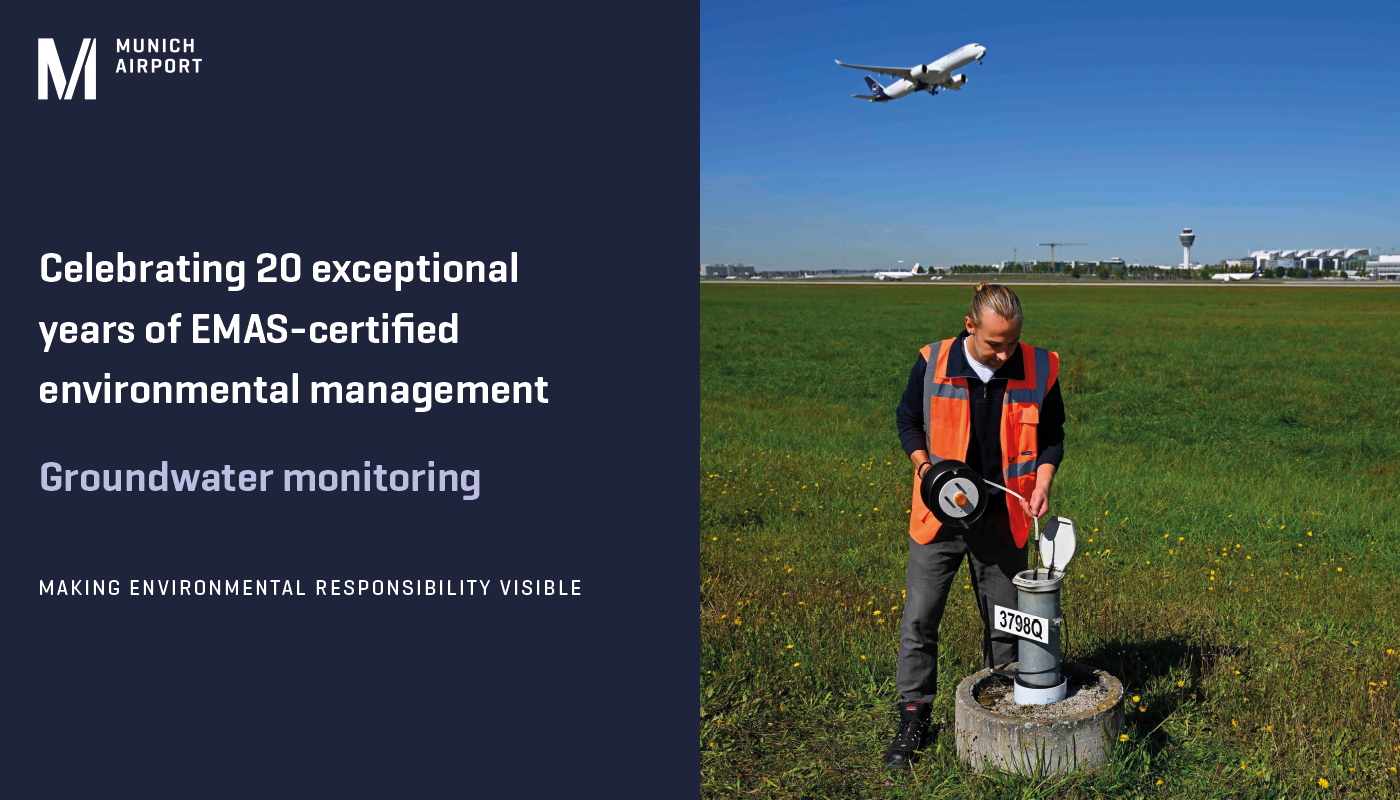
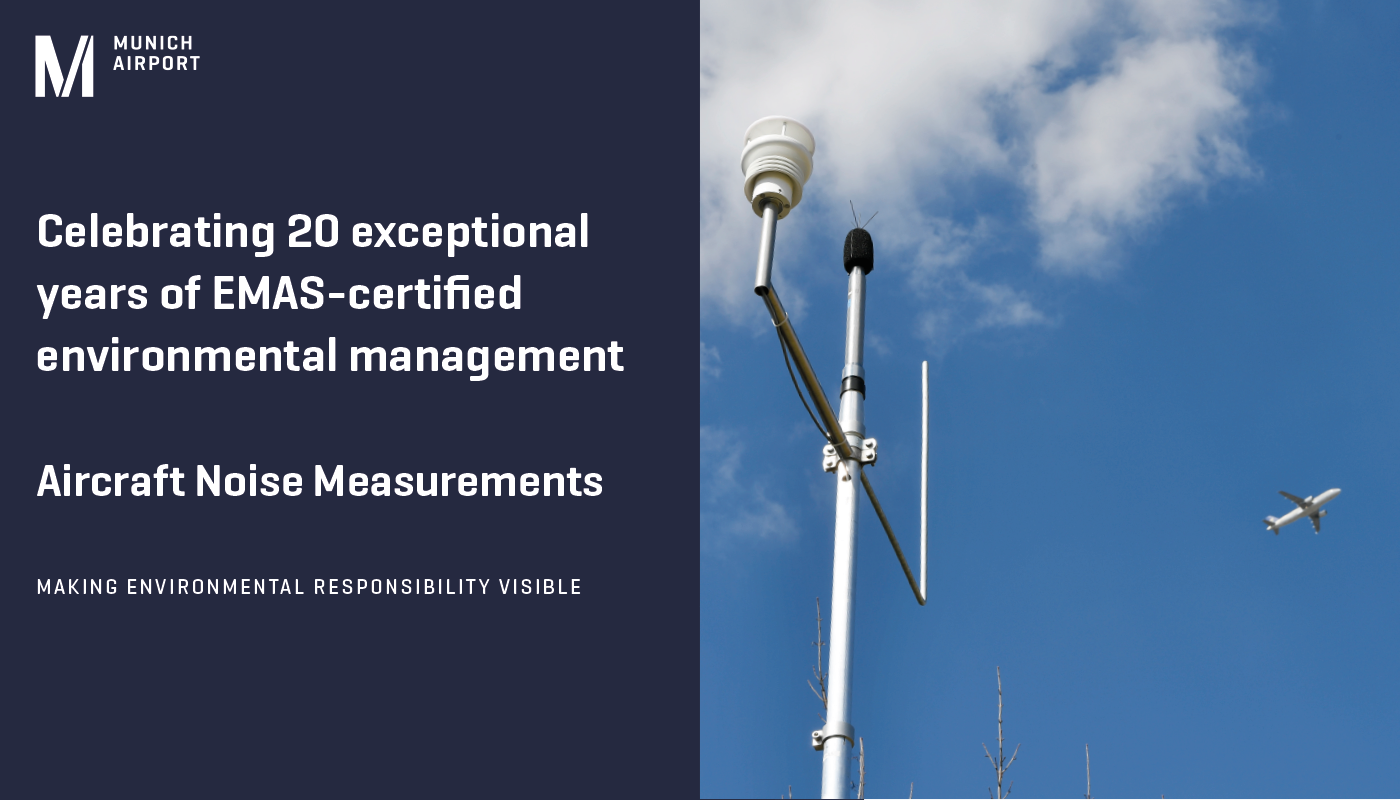
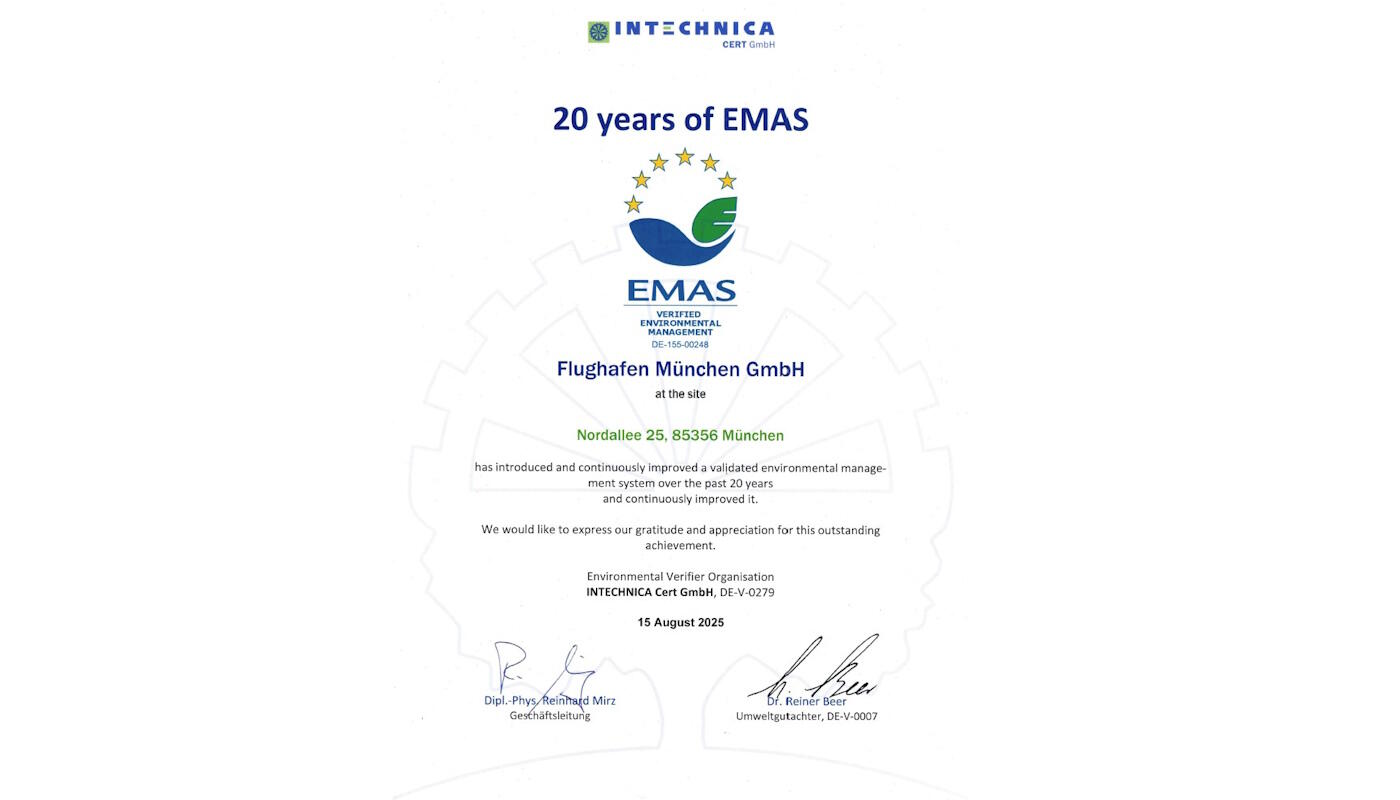
Flughafen München GmbH (FMG) attaches great importance to protecting the environment. However, as with comparable infrastructure facilities, operating a commercial airport inevitably has an impact on the environment. This impact can affect the airport grounds and surrounding areas in various ways. FMG is therefore committed to continuously improving its environmental performance. For 20 years now, a key pillar of this commitment has been the audited and certified environmental management system in accordance with the European EMAS Regulation (EC) No. 1221/2009 and DIN EN ISO 14001.
In collaboration with employees in FMG's environmentally relevant departments, a series of outstanding flagship projects have been developed and implemented in recent years. In the future, the environmental management system will continue to support FMG in continuously improving its environmental performance, reducing its impact, and thus making a valuable contribution to Munich Airport's journey toward becoming a green mobility hub. This is made transparent through communication and information about the environment at Munich Airport:
WE MAKE THE ENVIRONMENT VISIBLE.